
It’s been a while since you have heard from us and we have several important updates.
STAFF UPDATES
- We are excited to announce that Deb Reynolds, our recently retired Communications Coordinator, has returned to the Joint Venture as a contractor. After leaving USFWS, Deb started her own business, Chirp & Tell Communications, and is providing support to several bird conservation groups, including East Gulf Coastal Plain Joint Venture, Atlantic Flyway Shorebird Initiative, American Oystercatcher Working Group, and now the ACJV. She is very excited to rejoin the team and looks forward to working with staff and partners to create new products and tools to advance goals and priorities of the partnership. You can reach Deb at debra_r_reynolds@fws.gov.
- Franco Gigliotti, one of our intrepid Pathways students, completed his PhD in December on the response of tidal marsh birds to restoration actions at the University of Connecticut. He has since taken a position as a regional biologist with Ducks Unlimited, overseeing salt marsh restoration work in southern New England. Congratulations, Franco!
INTRODUCING TECH WEEK
As part of our efforts to better integrate the work of our technical partners with the efforts of the Management Board, we are piloting a new ACJV Tech Week structure this spring. This structure is loosely modeled after the Atlantic Flyway Council meetings but with a flagship species flair. Each of our flagship species working groups will meet the week of March 16th to discuss technical needs, collaborative opportunities and requests of the Management Board. These groups will then report out to the Board during our Spring Management Board meeting, and we will jointly discuss opportunities to further coastal marsh conservation priorities. A big thank you to all of you who will be participating in these important meetings!
SPRING MANAGEMENT BOARD MEETING
The ACJV Management Board will be hosting their Spring meeting in Beaufort, NC, March 23-26. They will meet in conjunction with technical representatives during this time.
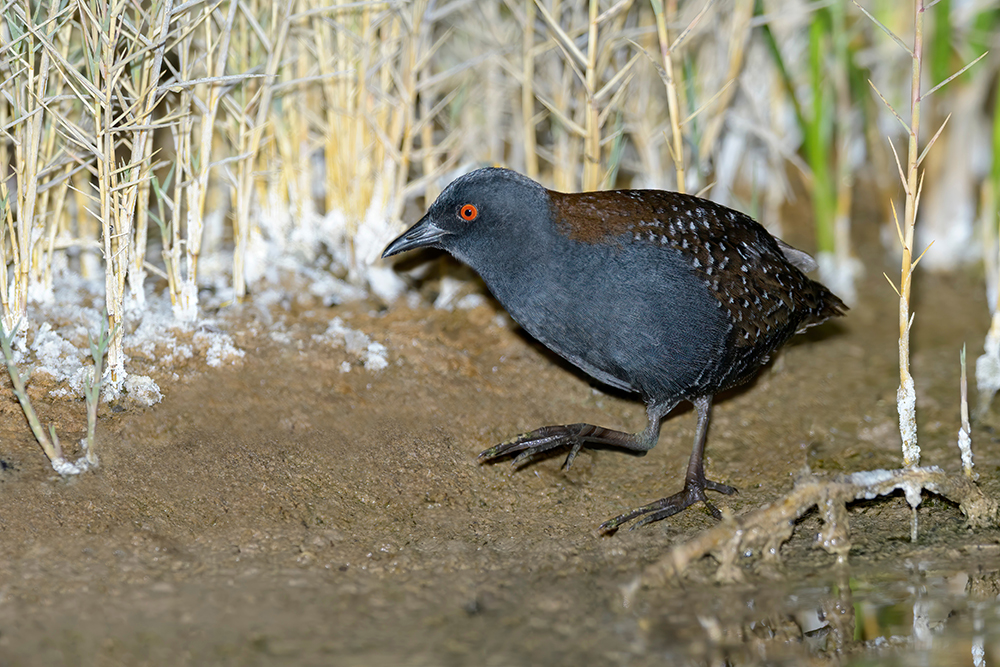
FLAGSHIP UPDATE: BLACK RAIL
Black Rail Acoustic Recording Unit Analyses
We are continuing to assist partners with analyzing Autonomous Recording Unit (ARU) data for a variety of Black Rail projects across the species’ range. We are currently wrapping up analysis of data collected in South Carolina for inclusion in a manuscript led by Dr. Abby Blake-Bradshaw (Forbes Biological Station) that includes results across multiple states to help inform sampling designs. Next steps will include working directly with partners from New Jersey to Florida through the Black Rail ARU working group to address their backlog of unanalyzed data and to help partners who want to analyze their own ARU data. This work will help to accelerate our understanding of population status, trend, distribution, and habitat relationships for this cryptic species.
Black Rail Management Priorities
Over the last several years, the ACJV has been working with partners to develop priority marshes and priority site-specific management actions for both Saltmarsh Sparrows and Black Rails. In 2025, we completed Habitat Management Priorities for the Eastern Black Rail in Florida and an associated online mapper. Currently, we’re planning workshops with partners to identify Black Rail priorities in Delaware and New Jersey, with more states to follow.
Black Rail Working Groups
ACJV staff help to organize an ACJV-wide Black Rail Working Group and state working groups in Florida, South Carolina, and North Carolina. These groups support partners through information sharing, partnership-building, and coordination of conservation actions for this secretive imperiled species. Recent meetings included the North Carolina (11/19/2025), South Carolina (1/9/2026), and Florida (3/2/2026) groups. Upcoming meetings include the ACJV-wide (3/16/2026) and South Carolina (4/14/2026) groups. If you are interested in participating or learning more, please contact Craig_Faulhaber@fws.gov.
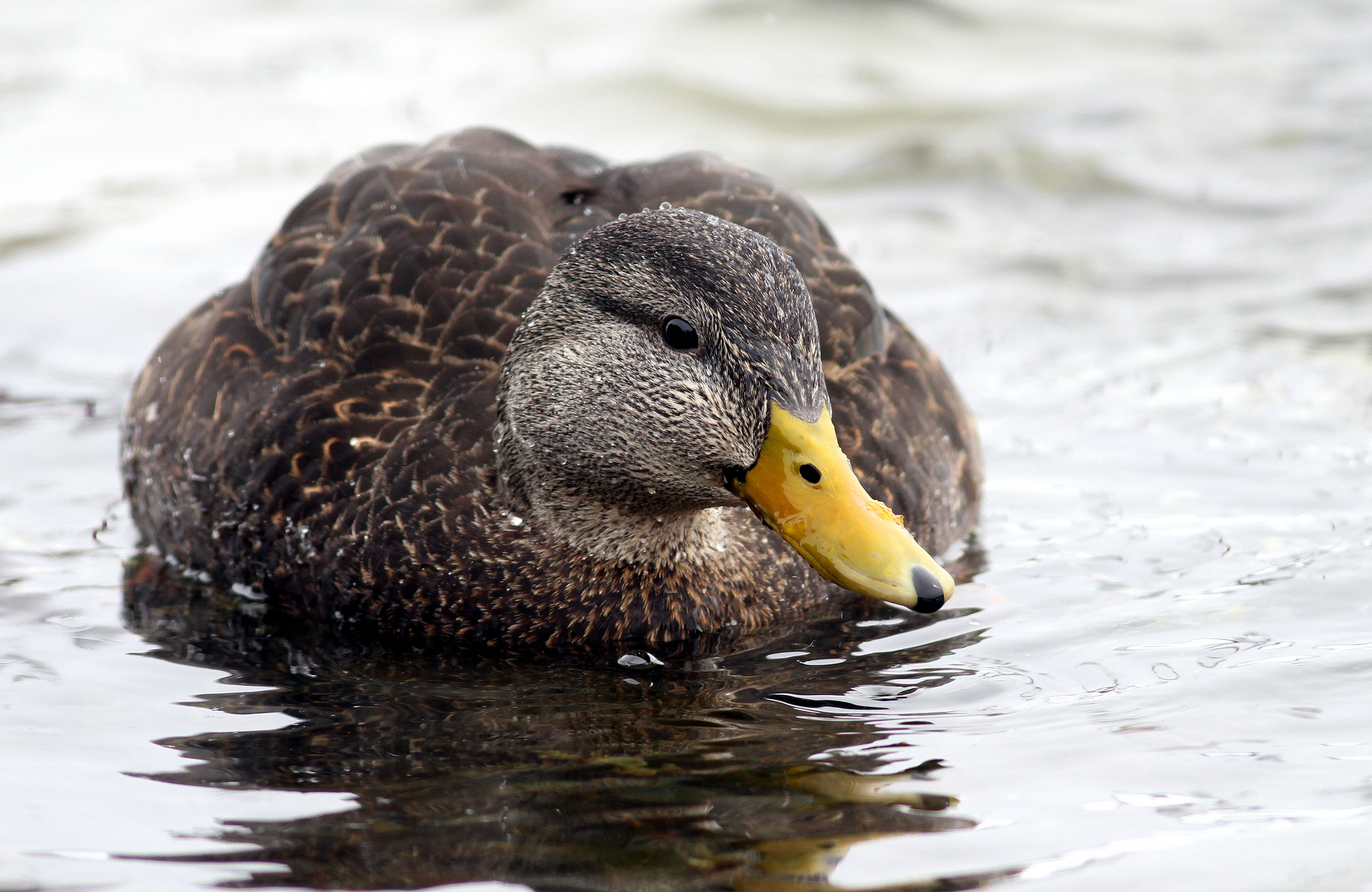
FLAGSHIP UPDATE: BLACK DUCK
Mapping Impoundments
Last year, the Black Duck Working Group identified the need for a regional layer of waterfowl impoundments across the ACJV geography. Partner data exists to delineate some impoundments, but there are gaps in many areas, especially on state and private lands. To help fill these gaps, ACJV staff have developed an interactive “Impoundment Mapping Tool” to allow users to view the impoundment information we have collated to date and easily digitize new locations and metadata for impoundments that are not yet represented. The outcome of this tool will be an updated layer of waterfowl impoundments throughout the ACJV geography that can be used to help inform waterfowl habitat conservation and management priorities. We plan to demonstrate and circulate the tool during our upcoming Black Duck Working Group meeting in March.
North American Waterfowl Management Plan Committee Report-out
Forty years ago, the North American Waterfowl Management Plan (NAWMP) was developed in an effort to help stem the decline of waterfowl populations. Joint Ventures, including the Atlantic Coast Joint Venture, are the conservation delivery arm of this and the other bird conservation plans. Every four years, each Joint Venture reports out to the NAWMP Plan Committee on progress made toward waterfowl population objectives in the Plan. This year, the ACJV met with the Plan Committee and two other Joint Ventures in Boston for our report-out where we discussed our flagship approach and the many accomplishments of the JV partnership toward coastal marsh species conservation.
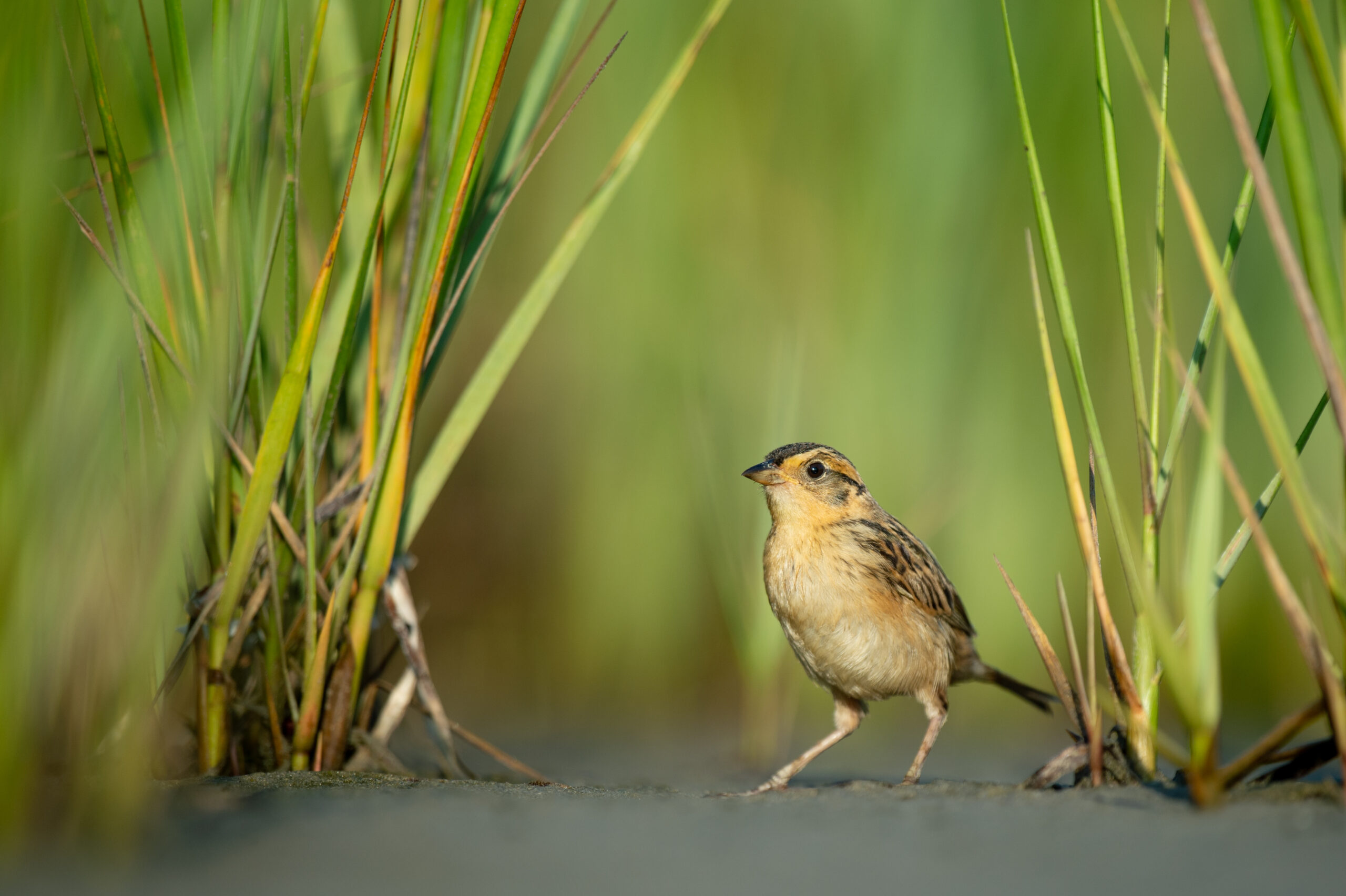
FLAGSHIP UPDATE: SALTMARSH SPARROW
Prioritizing Wintering Habitat for Restoration and Protection for Tidal Marsh Sparrows
In 2025 we met several times with tidal marsh sparrow experts to better understand tidal marsh sparrow habitat use on the wintering grounds. We are collaborating with the US Geological Survey (USGS) to create a predictive raster layer of high-quality habitat for sparrows from New Jersey to Florida to kickstart our prioritization process for the southern half of the ACJV geography. We are compiling the results of our habitat modelling effort and look forward to reviewing it during our wintering grounds working group meeting.
FUNDING
The National Fish and Wildlife Foundation (NFWF)
NFWF has released Requests for Proposals (RFPs) for three initiatives that fund restoration and science in coastal marshes. The National Coastal Resilience Fund pre proposal is due March 31st with full proposals (by invite only) due June 24th. The Delaware Watershed Conservation Fund full proposals are due March 26th – this opportunity is unique in that it allows federal applicants! Chesapeake Watershed Investment Landscape Defense (Ches WILD) proposals are due April 9th. Please reach out to Aimee Weldon if you would like assistance preparing a proposal!
North American Wetlands Conservation Act (NAWCA)
On 12/4/2025, the North American Wetlands Conservation Council approved four of seven projects submitted by ACJV partners for the first round of fiscal year 2026 Standard Grants. If given final approval by the Migratory Bird Conservation Council this spring, these projects will conserve over 45,000 acres of habitat, and the $11.6M NAWCA investment will leverage over $25M in partner match. The second round of fiscal year 2026 Standard Grants Notice of Funding Opportunity is currently delayed but is expected to be out in the coming months. Please reach out to Craig_Faulhaber@fws.gov or Pamela_Loring@fws.gov if you need assistance with proposal development.
National Coastal Wetland Conservation Grants
The 2027 National Coastal Wetland Conservation grants Notice of Funding Opportunity is currently delayed but is expected to be out in the coming months. Stay tuned for that and please let us know if you have projects in mind where you would like assistance crafting a proposal. Eligible projects include the acquisition of real property interest in coastal lands or waters and the restoration, enhancement, or management of coastal wetlands ecosystems.
NRCS Conservation Effects Assessment Project
In July 2025, the NRCS Conservation Effects Assessment Project (CEAP) awarded the ACJV five years of funding ($2.5M) to support six partner projects focused on the effects of management actions on Black Rails and Saltmarsh Sparrows. Projects will examine the subtle topography needed by Black Rails to inform wetland creation and restoration and will evaluate the effects of prescribed fire, placement of dredged material, supplemental irrigation, and hydrologic restoration. ACJV staff currently are working with partners on cooperative agreements for each project.
Florida State Wildlife Grant to Support Black Rail Conservation
The Center for Conservation Biology at William and Mary, with ACJV assistance, recently received funding through Florida Fish and Wildlife Conservation Commission’s State Wildlife Grant program to inform management of Black Rails in South Florida. Previous work conducted through CEAP funding indicated that South Florida’s vast freshwater wetlands and prairies may contain a significant Black Rail population. This project will examine the effects of fire, culverts, and other topographic features on Black Rail occupancy in these seasonally-flooded, sheet-flow wetlands. The project also plans to gain insights into Black Rail breeding phenology, which – like that of many South Florida birds – may differ from other parts of the species’ range.
COASTAL MARSH PROJECT DATABASE
Our Coastal Marsh Project Database is up and running! Please visit our overview page to see if your restoration project is in the database, and if not, add an entry! Check out our how-to webinar for guidance in getting started in our database.